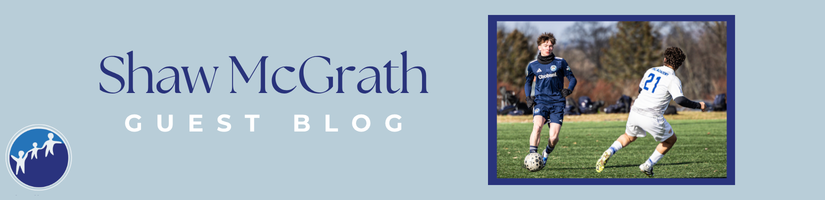
When people support medical research, it can sometimes be hard to see where that support goes. Research can sound distant from everyday life, like something that happens in labs, hospitals, meetings, or data systems far away from the patient. But for a kid living with a pediatric rheumatic disease, research is not distant at all.
It affects how quickly doctors can understand what is happening, which treatments are available, how families make decisions, and whether young patients feel seen in the process. I know this because I have lived through the uncertainty that pediatric rheumatology research is trying to reduce.
When my knee first started hurting in eighth grade, I thought it was just part of being an athlete. I was thirteen, playing competitive soccer, and used to soreness. At the time, I expected a simple process: see a doctor, get a diagnosis, follow a treatment plan, and return to the field.

That is not what happened.
What began as knee pain turned into months of appointments, tests, changing explanations, and unanswered questions. At different points, I was told it could be tendinitis, Osgood-Schlatter, Lyme disease, or something related to growth. Each new possibility brought a little hope, but also more frustration, because it felt like I was being passed from one answer to another without anyone fully understanding what was happening. In 2023, my symptoms worsened, with fatigue and joint pain spreading, before I was eventually diagnosed with enthesitis-related arthritis and polyarticular juvenile idiopathic arthritis after a full rheumatologic workup.
Getting a diagnosis gave a name to what I was experiencing, but it did not immediately make life easier. One of the hardest parts was that most of what I was dealing with was invisible. My teammates could see when I missed practice or did not play the same way, but they could not see the appointments, fatigue, joint pain, or uncertainty behind it. Even explaining that I had arthritis as a teenager could be frustrating, because many people did not realize kids could have arthritis or assumed it was something minor. Coaches still expected consistency. School kept moving. I often felt like I had to explain myself over and over, even when I was still trying to understand what was happening myself.
Treatment became a process of trial and error. I tried physical therapy, different recovery methods, and medications including Humira, Cosentyx, Xeljanz, and Rinvoq. Some treatments helped more than others, but none offered a simple or immediate solution. I had to learn that managing juvenile arthritis is not always about finding one perfect answer. It is about continuing to ask questions, paying attention to your body, and adjusting when something is not working.
As an athlete, that was difficult to accept. Soccer had always been a major part of my life, and not just as a casual activity. I played competitively, traveled for tournaments, and had built much of my routine and identity around the sport. There was a period when I had to step away completely. I considered quitting because playing through pain no longer made sense. Over time, I started to understand that stepping away did not have to mean giving up. It could be part of learning how to return in a healthier and more intentional way.
My experience also changed how I thought about medicine and research. At first, I just wanted someone to tell me what was wrong and how to fix it. But as my journey continued, I became more interested in understanding why pediatric rheumatic diseases are so complex, why treatment can be different for each patient, and why patient experiences matter when researchers are trying to improve care.
That interest eventually led me to advocacy. In 2024, I launched JAConnect, a website created to help raise awareness and support others in the juvenile arthritis community. Around the same time, I connected with doctors and researchers, including through CARRA, and attended the CARRA meeting and reception in Washington, D.C. during ACR Convergence.
Seeing that community changed my perspective. Before, juvenile arthritis often felt like something I was dealing with mostly on my own, from one appointment to the next. Through CARRA, I saw physicians, researchers, patients, caregivers, and advocates working together toward a shared goal: improving the lives of children with rheumatic diseases. Being in a room with more than 200 people who cared deeply about pediatric rheumatology made me feel less alone and helped me realize how many people are working to help kids and teens like me.
That is what makes CARRA’s work so important. Pediatric rheumatic diseases affect much more than joints. They affect school, sports, friendships, confidence, family routines, and daily life. Behind every diagnosis is a child trying to keep being a student, an athlete, a sibling, a friend, and themselves.
When someone gives to CARRA, they are not just supporting an organization. They are supporting the research, collaboration, and patient-centered work that can help families move from confusion toward clarity. They are helping create better tools, better studies, better treatment decisions, and a stronger community for kids who are still waiting for answers.
Now, as an intern with CARRA, I am grateful to contribute to an organization whose mission connects directly to my own experience. I am still managing arthritis, and I am still learning what it means for my life as a student and athlete. But I no longer see my story only as a medical challenge. It has become a reason to ask questions, share what I have learned, and help other young people feel less alone.
My story is only one example, but it shows why this work matters. Juvenile arthritis is not just “joint pain.” It can shape a young person’s life in ways others may not always see. Young patients deserve to be heard, believed, and included in the conversations that shape their care.
Through CARRA, those voices can become part of something larger: a collaborative effort to improve the future for children living with pediatric rheumatic diseases.
About Shaw McGrath
Shaw McGrath is a rising senior at Avenues The World School in New York City. He plays competitive soccer for Dusc MLS Next and is passionate about sports, pediatric rheumatology awareness, and helping other young people with juvenile arthritis feel less alone.
Donate here to CARRA to support research and transform the lives of children with rheumatic diseases.