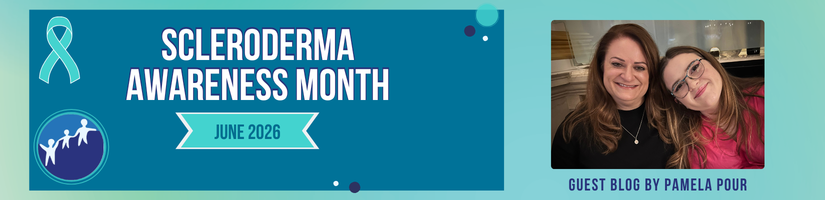
Imagine experiencing a family vacation of a lifetime in the Dubai desert, under the glistening moon lit starry night. Surrounded by bright colored blanketed chairs and sparkling belly dances as your family eagerly awaited fresh chicken kebabs to be served. A little girl walking by, stops next to my daughter, reaches out and touches her cheek, “What’s wrong with her?” the girl asks me. I quickly replied, “Nothing, she’s fine!” The young Bedouin girl touches her arm and cheek, “She’s hard!” My worst fears had just been confirmed.
Scleroderma Symptoms
For more than a month I could see something was wrong with our daughter, Grace. Her earlobes were getting thick and hard, a toothbrush did not fit between her lip and teeth, she needed help getting into the car and bed, she was no longer coloring inside the lines, and so many more red flags.
In 2015, we were living in Shanghai, China, for my husband’s job. We were celebrating the Chinese New Year Holiday in Dubai, when an 8-year-old local girl identified scleroderma with one touch. We instantly recognized that fibrosis in Grace’s skin was progressing aggressively, getting worse hour by hour.
The Diagnostic Odyssey
We knew that it was essential to travel back to the United States for a medical evaluation. March 19th Grace and I landed in the US, with the idea that after a few weeks of medical appointments, we would return to China. Little did I know, Grace would never return to the place she called home. Like nearly every parent of a child with systemic scleroderma, we were suddenly thrust onto a roller coaster of appointments, diagnostic tests, medical conversations, and more questions than answers.
Aggressive Treatment
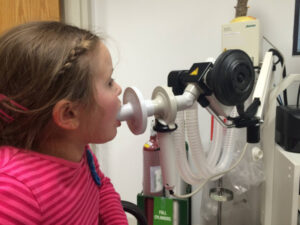
Three hospitals in two different states, two CT scans, two MRI’s, two X-rays, two echocardiograms, two kidney dopplers, two punch biopsies, one swallow study, one upper GI, three pulmonary function tests, and poked more than thirty times, insertion of a mediport, and over 40 tubes of blood drawn all in the first month in the US. Grace was diagnosed with systemic scleroderma and in interstitial lung disease (ILD).
Aggressive treatment began almost immediately. IVIG, Methylprednisolone, Cyclofosimide, Rituxan, oral steroids, and Mycophenolate mofetil all saved my daughter’s life. While the scleroderma rollercoaster is ever present in our lives, the first two years were by far the worst. After being given 5 -10 years to live, systemic scleroderma is almost undetectable in Grace’s skin and lungs today. She beat the odds!
Where Scleroderma Volunteerism was Born
Early in Grace’s systemic scleroderma journey, a friend of mine told me that Grace was incredibly strong and resilient, and that we would someday use this horrible diagnosis to find a way to have a positive impact on other patients. Our family was in such distress that I could not imagine being able to help anyone. But her powerful words remained in the back of my head.
Sharing Our Scleroderma Story
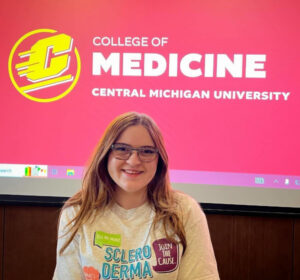
A year after Grace’s initial diagnosis, I was approached by the Michigan Chapter of the Scleroderma Foundation to share Grace’s story with second-year medical school students along with two adult scleroderma patients. A few minutes into my talk, Grace jumped up and asked if she could share her perspective. The sudden realization that bringing our scleroderma experiences to future doctors could only help facilitate early diagnosis and treatment as these young students became physicians themselves. We began attending scleroderma events, participating in fundraisers and local parades and awareness activities. Soon after that presentation, an extraordinary opportunity was presented to me by way of another scleroderma mom, Christina Loccke, who invited me to learn more about an organization called CARRA. I was excited to learn about CARRA and get involved.
Collaborating in Scleroderma Research
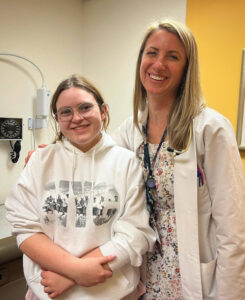
Grace became a patient of CARRA member Dr. Kathryn Torok at UPMC Pittsburgh. Our family donated bio samples for Dr. Torok’s research, and Grace officially became part of the CARRA Registry. Grace joined two research studies and is always open to helping Dr. Torok and her team anyway she can. Our family discussions surrounding scleroderma always involve doing our best to be part of the solution and giving back to support the work of the doctors who contributed to saving Grace’s life.
Part of the CARRA Community
Initially I felt nervous about being a non-medical person working side by side with scleroderma specialists, physicians, and researchers to support pediatric scleroderma research. Once I began meeting other parents of children with rheumatic conditions, I realized the positive impact that parent involvement could have in guiding and supporting rheumatic research and related projects. Speaking with Vincent Del Giazo, and learning his personal story gave me the inspiration and motivation I needed to become a research partner. Understanding how grossly underfunded pediatric rheumatological research is was shocking! I could not walk away from the opportunity to provide positive support of pediatric rheumatology research.
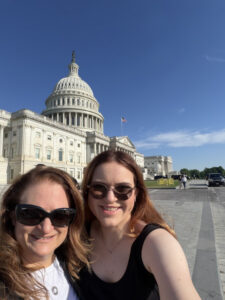
Collaborating with a team of physicians, researchers, and parents became the missing piece in the puzzle of the volunteer work I was doing within the scleroderma community. I am proud to be a member of CARRA’s Scleroderma Workgroup and Med Ed Workgroup. Through CARRA, I have helped create a Biosample Brochure for parents, reviewed grant applications, co-developed a “Barriers to Care” survey in Scleroderma, and co-authored an article in a medical journal. I have also attended CARRA’s Annual Scientific Meetings. Recently, Grace and I attended a Capitol Hill Day sponsored by the Coalition of Skin Diseases where we impressed upon lawmakers the importance of increased funding of the NIH.
About Pamela Pour
Pamela Pour lives in Michigan and is the wife of Brian and the mother of Mason and Grace. Her family lived in Shanghai, China for nearly 8 years before her daughter was diagnosed with Systemic Scleroderma and ILD in 2015. Pamela has been Leader of the Parents of Kids with Scleroderma Support Group since 2017 (sponsored by the Scleroderma Foundation of California), a Scleroderma Patient/Parent Educator since 2016, Chair of the Caring for Kids with Scleroderma Conference through the Scleroderma Foundation of Greater Chicago, and is involved with various fundraisers, walks, and awareness activities through the years. Pamela is a founding board member for the Scleroderma Kids Alliance. She has been involved with CARRA since 2018.