
Colleagues from across the pediatric rheumatology community are reflecting on the life and legacy of Professor Susan D. Thompson, PhD, who passed away on June 30th. Known internationally for her research expertise, she was also deeply admired in the CARRA community for her collaborative spirit.
Sue was a researcher at Cincinnati Children’s Hospital Medical Center and the University of Cincinnati College of Medicine for more than three decades. She served as the principal investigator of the Cincinnati Rheumatic Disease Core Center from 2002 through 2022, which was funded by NIAMS/NIH.
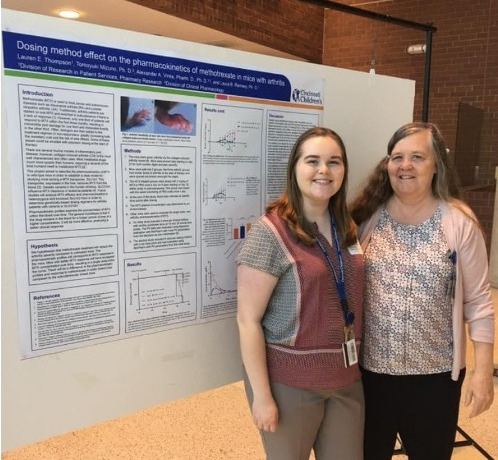
She was best known for her pioneering research into the genetic basis of juvenile idiopathic arthritis and other pediatric autoimmune disorders. Her studies have helped identify disease susceptibility genes, biomarkers, and molecular pathways that influence disease severity and treatment response. Further, her research helped support precision medicine and personalized approaches to pediatric autoimmune disease management.
“Sue Thompson was an internationally recognized expert in genetics related to the risk and pathogenesis of a variety of rheumatic diseases in children,” said Daniel J. Lovell MD, MPH, the Joseph E. Levinson Professor of Pediatrics at Cincinnati Children’s Hospital Medical Center. “She made some of the earliest observations in children with JIA.”
Lovell noted that she led and contributed to a number of international collaborations.
“Sue was a brilliant scientist whose research made foundational contributions to understanding the biology and genetic basis of juvenile arthritis. She accomplished this in large part through collaboration – working together with international teams of researchers to assemble the data needed for these studies,” said Grant Schulert, MD, PhD, of Cincinnati Children’s, who is Director of the CARRA Biobank. “This really highlights her personal and scientific generosity and lack of ego, and her focus on doing good science.”
During her impressive career, Sue was a dedicated leader in CARRA. She helped create the CARRA Biobank with Rae Yeung, MD, PhD, FRCSC, and served as the first director of the US CARRA Biobank. She played a key role in growing the Biorepository, which today has more than 2,200 blood samples across more than 20 cohorts. Sue also served as Vice-Chair of CARRA’s Translational Research Committee from 2007-2011, as well as Chair and Steering Committee Member from 2011-2014. In recognition of her incredible contributions to our community, she was awarded the CARRA Outstanding Service Award in 2023 at our Annual Scientific Meeting in New Orleans.
“Sue made everyone around her better,” said Robert Colbert, MD, PhD, Clinical Director, NIAMS. “She was dependable, thoughtful, and endlessly dedicated; she believed in people and in the power of an organization like CARRA guided by strong principles.”
While she will be remembered as an international expert in the genetics of pediatric rheumatic diseases, CARRA members say her greatest legacy is her generous collaborative spirit.
“Having worked with Sue for several decades on research projects, I feel another aspect needs to be emphasized: she was extremely kind, supportive, and patient,” Lovell added. “She was always willing to help you understand the science better and to help you advance your research project.”
Colbert, who worked with Sue on several projects from the start of their faculty appointments in Cincinnati in 1994, described her genuinely collaborative nature.
“She quietly improved the work of others, celebrated their successes as enthusiastically as her own, and inspired others through her generosity, wisdom, and unwavering commitment,” said Colbert. “She leaves behind a legacy of excellence, kindness, and service that will continue to inspire us.”
Sue was the first female faculty member in the Division of Rheumatology at Cincinnati Children’s Hospital, and she paved the way for women in science. She was also known for being an outstanding mentor to many young rheumatologists and scientists.
“She was deeply committed to training the next generation of scientists in our field, from students to fellows to junior faculty – at CCHMC as well as around the country,” noted Schulert. “She was always available to offer help and advice, and quick to share resources from her lab if they could help.”
Per her family’s request, in lieu of flowers, donations may be made to CARRA in her honor here.
You can also share a tribute to Sue via CARRA’s Mentors Who Made Us program here.